Writer: Farniza M. Marcaban
Photographer: Cristobal A. Navalez, Jr.
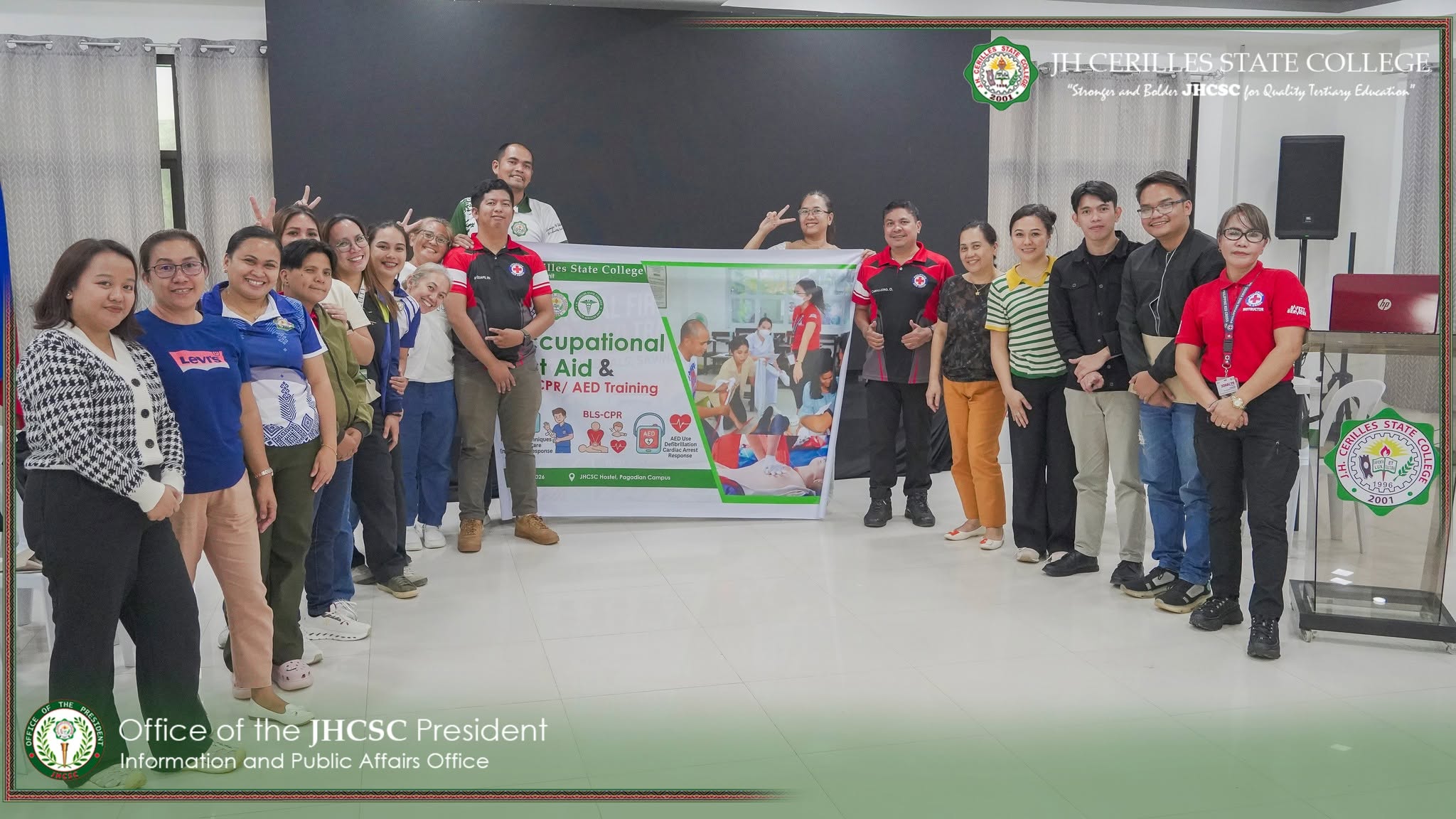
The Health Services Unit of J.H. Cerilles State College (JHCSC) successfully conducted a two-day Basic Life Support (BLS) Training at the JHCSC Hostel, Pagadian Campus, bringing together clinic personnel, health staff, selected faculty members, and employees for an intensive learning program on emergency response and life-saving interventions. Spearheaded by School Nurse Joanne Happy C. Hadjirul, RN, DM, the activity aimed to strengthen the institution’s emergency preparedness by equipping participants with the essential knowledge, practical skills, and confidence needed to respond effectively during life-threatening situations such as cardiac arrest, choking, respiratory failure, and other medical emergencies before advanced medical care becomes available.
Recognizing that timely and appropriate intervention can significantly improve survival outcomes, the Health Services Unit organized the training to reinforce the College’s commitment to maintaining a safe and prepared campus environment. The program sought to develop participants’ competence in delivering immediate emergency care, promote greater awareness of health and safety practices, enhance their ability to respond promptly under pressure, and ensure that emergency response procedures are carried out in accordance with established Basic Life Support protocols. Through this initiative, JHCSC continues to invest in the preparedness of its workforce to protect the welfare of students, employees, and campus visitors.
The two-day training combined classroom instruction with extensive practical exercises to provide participants with a comprehensive learning experience. Resource persons first conducted lectures and orientations on the fundamental principles of Basic Life Support, emphasizing the importance of the “chain of survival,” scene safety assessment, patient evaluation, activation of emergency medical services, and the proper sequence of emergency response. Participants were then introduced to the latest guidelines and standard procedures in administering cardiopulmonary resuscitation (CPR), rescue breathing, airway management, and choking interventions for both adult and pediatric patients.
Following the lecture sessions, participants engaged in hands-on demonstrations and return demonstrations using CPR training mannequins and emergency response equipment under the close supervision of certified instructors. Through guided practice, they performed chest compressions, rescue breathing, and choking-management procedures while receiving immediate feedback to improve the accuracy and effectiveness of their skills. The training also incorporated simulation drills that replicated real-life emergency scenarios, allowing participants to apply what they had learned in realistic situations that required teamwork, communication, quick decision-making, and proper execution of life-saving interventions.
Serving as resource persons were Danilo M. Caballero, EMT, of CSR Safety Services and Disaster Management Services; Jonalyn B. Caballero, Safety Services Instructor; and Ralph Daniel R. Quiapo, RN, Safety Services Instructor. Drawing on their professional experience in emergency response and disaster management, the trainers shared practical techniques, demonstrated evidence-based procedures, and provided valuable insights into managing medical emergencies in and out of healthcare settings. Their interactive approach encouraged participants to actively engage in discussions, ask questions, and gain confidence in applying Basic Life Support principles during actual emergencies.
The activity also served as an opportunity to cultivate a stronger culture of preparedness among JHCSC employees by emphasizing that emergency response is a shared responsibility within the institution. Beyond developing technical competencies, the training highlighted the importance of remaining calm under pressure, collaborating during emergencies, and providing immediate assistance while awaiting advanced medical responders. Participants also underwent competency assessments to evaluate their performance and reinforce the proper application of the skills acquired throughout the training.
The successful conduct of the Two-Day Basic Life Support (BLS) Training underscores J.H. Cerilles State College’s continuing commitment to promoting health, safety, and disaster preparedness across its campuses.
Through the leadership of the Health Services Unit and the initiative of School Nurse Joanne Happy C. Hadjirul, RN, DM, the College continues to strengthen its capacity to respond effectively to medical emergencies by empowering its healthcare personnel, faculty, and employees with essential life-saving knowledge and practical skills. As JHCSC continues to prioritize the well-being of its academic community, initiatives such as this reaffirm the institution’s dedication to fostering a safer, healthier, and more resilient learning and working environment.
Soar high, J.H. Cerilles State College!
“Stronger and Bolder JHCSC for Quality Tertiary Education”